From the Prime Minister's Office
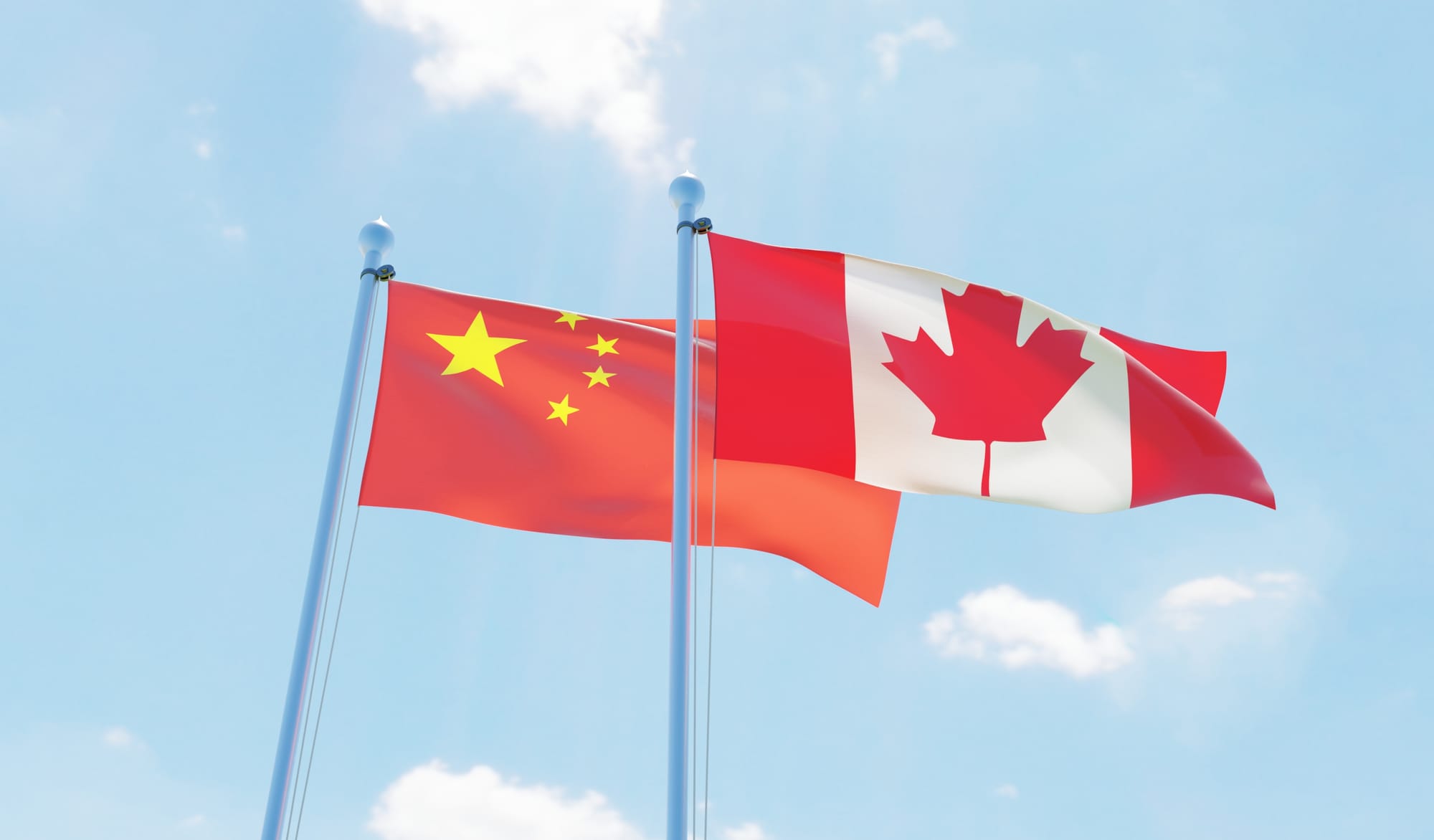
Prime Minister Carney forges new strategic partnership with the People’s Republic of China focused on energy, agri-food, and trade
In a more divided and uncertain world, Canada is building a stronger, more independent, and more resilient economy. To that end, Canada’s new government is working with urgency and determination to diversify our trade partnerships and catalyse massive new levels of investment. As the world’s second-largest economy, China presents enormous opportunities for Canada in this mission.
To forge a new Canada-China partnership, the Prime Minister, Mark Carney, visited Beijing, the People’s Republic of China, this week.
This marked the first visit to China by a Canadian Prime Minister since 2017. In Beijing, Prime Minister Carney met with the President of China, Xi Jinping, the Premier of China, Li Qiang, and the Chairman of the Standing Committee of the National People’s Congress of China, Zhao Leji.
After their meeting, Prime Minister Carney and President Xi released a joint statement outlining the pillars of Canada and China’s new strategic partnership.
Central to this new partnership is an agreement to collaborate in energy, clean technology, and climate competitiveness. Canada and China are both energy superpowers focused on expanding two-way energy cooperation – reducing emissions and scaling up investments in batteries, solar, wind, and energy storage. While in Beijing, the Prime Minister met business leaders in energy and clean technology to identify and accelerate Chinese investment opportunities in Canada.
To help deliver the full potential of these partnerships, and build up our domestic manufacturing sector, Canada will allow up to 49,000 Chinese electric vehicles (EV) into the Canadian market, with the most-favoured-nation tariff rate of 6.1%.
This amount corresponds to volumes in the year prior to recent trade frictions on these imports (2023-2024), representing less than 3% of the Canadian market for new vehicles sold in Canada. It is expected that within three years, this agreement will drive considerable new Chinese joint-venture investment in Canada with trusted partners to protect and create new auto manufacturing careers for Canadian workers, and ensure a robust build-out of Canada’s EV supply chain. With this agreement, it is also anticipated that, in five years, more than 50% of these vehicles will be affordable EVs with an import price of less than $35,000, creating new lower-cost options for Canadian consumers.
Agri-food and trade are foundations of the longstanding relationship between Canada and China – and China continues to be our second-largest export market. To renew and strengthen that relationship, Prime Minister Carney and President Xi secured a preliminary agreement-in-principle with landmark measures to remove trade barriers and reduce tariffs:
- By March 1, 2026, Canada expects that China will lower tariffs on Canadian canola seed to a combined rate of approximately 15%. China is a $4 billion canola seed market for Canadian producers, and this change represents a significant drop from current combined tariff levels of approximately 85%.
- Canada expects that Canadian canola meal, lobsters, crabs, and peas will not be subject to relevant anti-discrimination tariffs from March 1, 2026, until at least the end of this year.
Together, these results will help unlock nearly $3 billion in export orders for Canadian workers and businesses as they realize the full potential of the massive Chinese market of 1.4 billion people.
Finally, to build on this momentum, Canada has set an ambitious goal to increase exports to China by 50% by 2030. To achieve this outcome, Prime Minister Carney and President Xi discussed increasing two-way investment in clean energy and technology, agri-food, wood products, and other sectors.
Canada and China are both strong advocates of multilateralism. As a key pillar of this partnership, we will deepen our engagement on improved global governance. We will collaborate closely in key areas of shared interest, including climate competitiveness and financial and macroeconomic stability. Canada looks forward to contributing to China’s 2026 Asia-Pacific Economic Cooperation (APEC) Presidency and appreciates China’s support for Canada’s bid to host the 2029 Summit.
Canada and China will also pursue pragmatic and constructive engagement in public safety and security. Our law enforcement agencies will increase cooperation to better combat narcotics trafficking, transnational and cybercrime, synthetic drugs and money laundering – and create safer communities for people in both of our countries.They will also explore further opportunities for cultural exchanges and partnerships, including supporting museums, digital content creators, visual artists – to increase travel exchanges and cultural ties. Prime Minister Carney welcomed the agreement between Destination Canada and China Media Group to facilitate further outbound tourism to Canada, especially as we prepare to co-host the FIFA World Cup 26™.
The Prime Minister welcomed President Xi’s commitment to introducing visa-free access for Canadians travelling to China.The Prime Minister’s visit to Beijing was the culmination of constructive, pragmatic engagement with the Chinese government over many months by the Prime Minister, members of his cabinet and caucus, and other officials. The Prime Minister looks forward to returning to China for the 2026 APEC Leaders’ Summit.
Quote
“At its best, the Canada-China relationship has created massive opportunities for both our peoples. By leveraging our strengths and focusing on trade, energy, agri-food, and areas where we can make huge gains, we are forging a new strategic partnership that builds on the best of our past, reflects the world as it is today, and benefits the people of both our nations.”— The Rt. Hon. Mark Carney, Prime Minister of Canada
Quick facts
- This was Prime Minister Carney’s first official visit to the People’s Republic of China.
- With this new trade agreement, Canada also expects to see a resolution of many long-term trade obstacles for a range of important agricultural sectors, from beef to pet food.
- During the Prime Minister’s visit, Canada and China secured new memorandums of understanding (MOUs) to reinforce cooperation on energy, combatting crime, cultural exchanges, wood products, and food safety and animal and plant health.
- The MOUs will strengthen both nations’ abilities to drive the global transition toward a low-carbon and climate-resilient economy, expand investment, and create high-paying careers. These are where Canadian industries and workers stand to benefit.
- China is the second-largest single-country trading partner to Canada, totalling $118.9 billion in two-way merchandise trade in 2024. Canadian merchandise exports to China were $30 billion, while merchandise imports were $88.9 billion.
- China is Canada's second-largest customer globally for agriculture, forest products, and seafood products, with sales of approximately $13.4 billion in 2024.
- This visit marked a turning point in the Canada-China relationship and builds on productive engagements undertaken this past year to advance cooperation and revitalise the trade partnership. These engagements include:
- Prime Minister Carney’s first meetings with President Xi on the sidelines of the Asia-Pacific Economic Cooperation Leaders’ Meeting in Gyeongju, the Republic of Korea, and with Premier Li at the 80th Session of the United Nations General Assembly in New York City, United States of America.
- The participation of Parliamentary Secretary to the Prime Minister, Kody Blois, in a trade delegation to China, led by the Premier of Saskatchewan, Scott Moe.
- A visit to China by the Minister of Foreign Affairs, Anita Anand, to meet with her counterpart, the Minister of Foreign Affairs of China, Wang Yi.
- A meeting between the Minister of International Trade, Maninder Sidhu, and the Minister of Commerce of China, Wang Wentao.
- A visit to China by the Minister of Agriculture and Agri-Food, Heath MacDonald, to engage with senior government officials and meet with key Chinese and Canadian industry leaders.
Related products
- Joint statement of the Canada-China Leaders' Meeting
- Backgrounder - Preliminary Agreement-In-Principle to Address Economic and Trade Issues between Canada and the People's Republic of China
- Canada-China Economic and Trade Cooperation Roadmap
- Prime Minister Carney meets with Chairman of the Standing Committee of the National People’s Congress of the People’s Republic of China Zhao Leji
- Prime Minister Carney meets with Premier of the People’s Republic of China Li Qiang